

Fitness equipment online. Buying fitness equipment online has become one of the fastest, most convenient, and most cost-effective ways to build a home gym. Whether your goal is muscle gain, fat loss, mobility, or overall wellness, online shopping gives you access to thousands of products, customer reviews, better pricing, and the ability to compare features instantly. This guide walks you through everything you need to know before buying fitness equipment online—what’s worth your money, what to avoid, and how to choose gear that will truly help you reach your fitness goals.
Why Buying Fitness Equipment Online Makes Sense
Online shopping offers several major advantages that make building a home gym easier than ever:
- Huge variety: You can find far more brands, models, and styles than any physical store could carry.
- Convenience: Shop 24/7, compare products instantly, and read real customer reviews before buying.
- Better prices: Online retailers frequently offer discounts, seasonal promotions, and bundle deals.
- No pressure: You can research in peace and buy only when you feel confident.
- Tailored to your lifestyle: A home gym lets you exercise anytime, without commuting, waiting for machines, or dealing with crowded spaces.
- Long-term investment: Quality fitness equipment pays for itself compared to months or years of gym membership fees.
These advantages make online shopping ideal for beginners to advanced athletes—but it’s important to choose correctly.
Types of Fitness Equipment and What They Do
1. Cardio Machines
Cardio equipment is perfect for improving endurance, heart health, stamina, and fat burning. The most popular choices include:
- Treadmills: Great for walking, jogging, or running indoors. Look for strong motors, incline settings, and shock absorption.
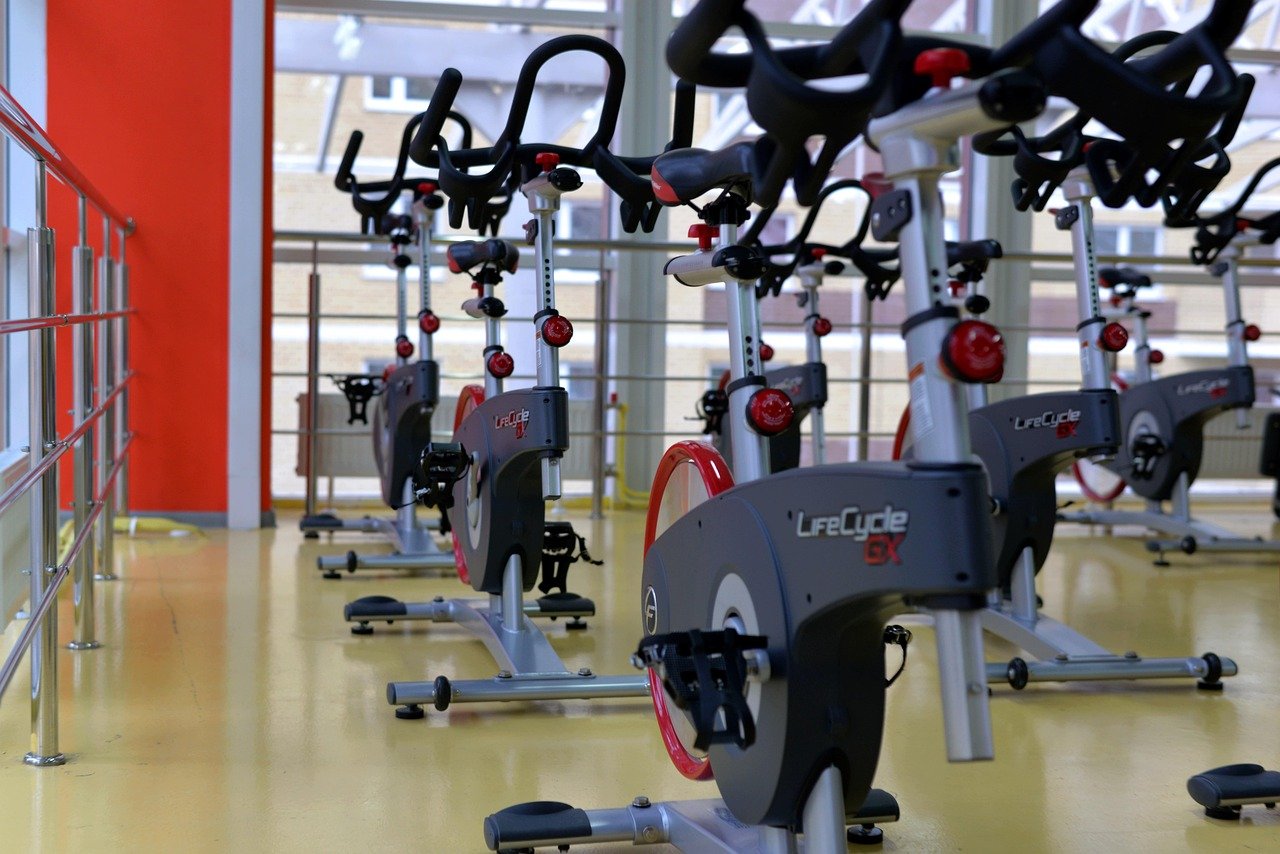
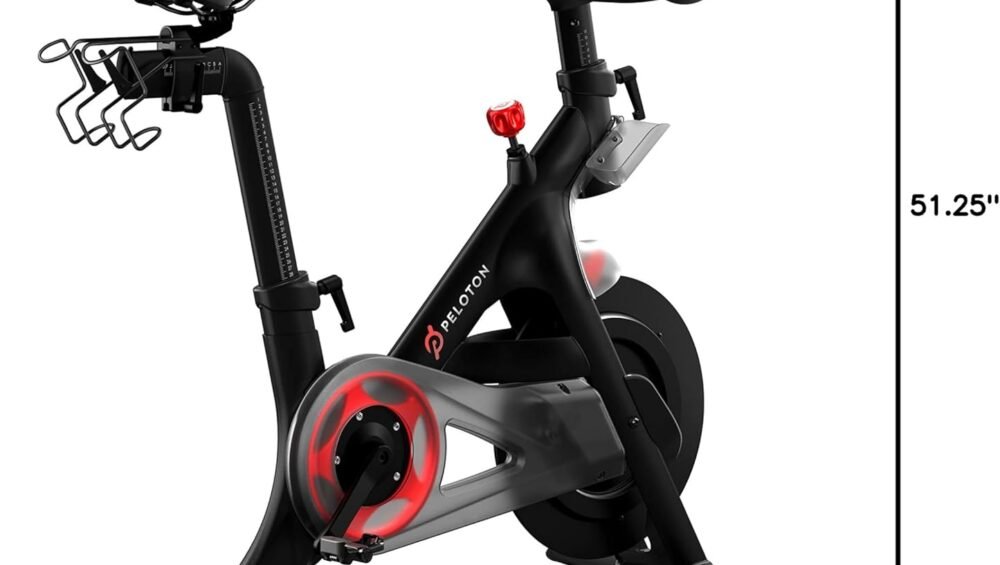
- Stationary bikes: Low-impact, joint-friendly cardio; excellent for strengthening the legs and improving stamina.
- Rowing machines: Provide a full-body workout, engaging back, legs, core, and arms while being easy on the joints.
- Elliptical trainers: Ideal for low-impact cardio with smooth movement that works upper and lower body simultaneously.
2. Strength & Resistance Equipment
Strength training is essential for building muscle, boosting metabolism, improving bone density, and increasing functional strength. Key items include:
- Dumbbells and free weights: Versatile and effective for full-body strength training and progressive overload.
- Kettlebells: Excellent for explosive training, core work, conditioning, and functional strength.
- Adjustable benches: Perfect for presses, rows, seated movements, and dumbbell routines.
- Cable systems or functional trainers: Provide multiple angles and resistance options for both beginner and advanced workouts.
3. Compact & Portable Gear
If you want affordable, space-saving tools, these are top choices:
- Resistance bands: Perfect for strength, mobility, warm-ups, and rehabilitation.
- Suspension trainers: Offer full-body functional training without heavy equipment.
- Ab wheels, jump ropes, sliders, and pull-up bars: Small but powerful tools for building strength, core stability, and conditioning.
Related Products
-
Portzon Weights Dumbbells 10 Colors
Original price was: $8.38.$5.55Current price is: $5.55. -
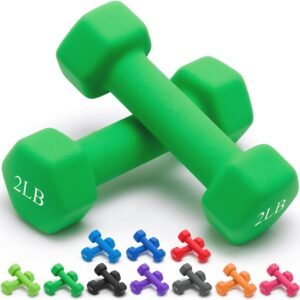
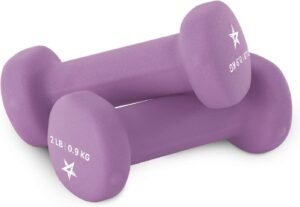
Yes4All Neoprene Coated Dumbbell Hand Weight Sets of 2
Original price was: $12.02.$7.31Current price is: $7.31. -
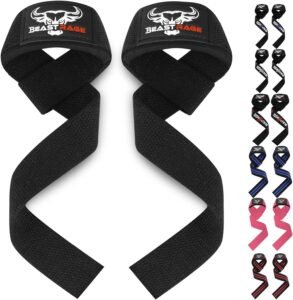
BEAST RAGE Lifting Wrist Straps for Weightlifting Weight Lifting Straps
Original price was: $10.99.$8.89Current price is: $8.89. -
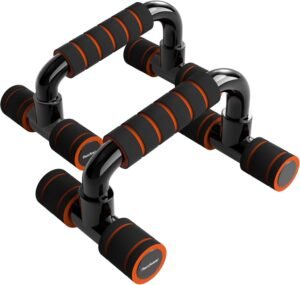
READAEER Push Up Bars Gym Exercise Equipment Fitness 1 Pair Pushup Handles with Cushioned Foam Grip
$9.88
4. Smart Fitness Machines
These modern devices integrate apps, screens, virtual classes, and tracking features:
- Smart bikes
- Smart mirrors
- Compact digital strength machines
They add motivation, structure, and personalization—great for those who want guided workouts.
What to Look for Before Buying Fitness Equipment Online
To make the right investment, check these important factors:
• Your fitness goals
Weight loss, strength, mobility, or conditioning? Your goals determine the best equipment.
• Available space
Measure your space before buying. Compact or foldable equipment is best for apartments or small rooms.
• Build quality
Look for heavy-duty steel frames, high weight capacity, smooth operation, and stable construction.
• Adjustability and versatility
Choose equipment that grows with you—adjustable dumbbells, variable resistance machines, or multifunction benches.
• User reviews
Customer feedback tells you more than any product description. Look for comments on durability, noise, comfort, and ease of assembly.
• Warranty and return policy
Always choose brands with solid return options and warranties on parts and labor.

• Your actual commitment
Choose equipment that matches how you realistically enjoy training—this ensures long-term use.
How Online Fitness Equipment Can Improve Your Life
Buying fitness equipment online doesn’t just make shopping easier—it improves your overall fitness lifestyle. You gain:
- A personalized workout environment
- The ability to train any time, even for short sessions
- Better consistency and motivation
- No wasted time commuting to the gym
- More control over your fitness progress
- A long-term health investment for you and your family
With the right gear, a home gym becomes a place of transformation, discipline, and daily habit building.
FAQ – Fitness Equipment Online
1. What fitness equipment should I buy first?
Start with versatile essentials such as resistance bands, adjustable dumbbells, a yoga mat, or a stationary bike. These cover strength, mobility, and cardio while staying budget-friendly.
2. How much space do I need for a home gym?
Small setups can fit in a 6×6 ft area. Larger machines—treadmills or rowers—may require additional space for safe movement.
3. Are smart fitness machines worth it?
Yes, if you enjoy guided workouts, virtual classes, and built-in coaching. They add convenience, motivation, and structure.
4. How can I avoid low-quality equipment when shopping online?
Check weight capacity, frame material, product photos, user reviews, and brand reputation. Avoid items with vague descriptions.
5. Will having equipment at home help me stay consistent?
Absolutely. When equipment is accessible, you’re far more likely to stick to a routine. Even 10–20-minute sessions become easy to fit in.
The conventional view of fitness massage equipment as a simple analgesic—a tool to make soreness go away—is a profound underestimation of its potential. In reality, these devices are not just for soothing muscles; they are instruments for neurological recalibration. When you use a foam roller or massage gun, the primary effect isn’t merely the breaking of physical adhesions (a concept modern science questions), but the sending of a powerful, non-threatening sensory signal to your central nervous system. This signal effectively “resets” the muscle’s resting tension level by down-regulating the gamma motor neurons that control its sensitivity. You aren’t just smoothing fascia; you’re hacking your body’s proprioceptive feedback loops, teaching it to perceive a wider, safer range of motion as normal. This transforms recovery from a passive, post-workout cleanup task into an active, foundational practice for enhancing future performance.
This leads to the most critical, yet universally omitted, step in any recovery protocol: neurological integration. The newfound mobility and reduced tension gained from using a massage gun or lacrosse ball are transient unless they are immediately anchored into a functional movement pattern. The space you create in your hip capsule with targeted pressure is just potential energy; without performing a deep squat or lunge within minutes, your nervous system will default to its familiar, restricted setting. Therefore, the true purpose of fitness massage equipment is not to serve as the finale of your training session, but as the prologue to your movement practice. It clears the static from your kinesthetic sense, allowing you to then rehearse and solidify cleaner, more powerful movement under load. In this framework, the foam roller and the barbell are not opposites; they are collaborative tools in the same neurological renovation project.
The digital marketplace has transformed the humble home gym from a collection of basic weights into a curated personal performance center. Unlike the finite, often overwhelming inventory of a physical store, the online world offers a near-infinite selection of specialized gear tailored to your exact biomechanics and goals. This abundance allows you to move beyond generic choices and find equipment engineered for your specific body type, training philosophy, and spatial constraints. It’s the difference between buying off-the-rack and having a bespoke fitness solution designed for the unique architecture of your life and the contours of your ambitions.
However, this digital convenience requires a new kind of consumer literacy, where the most valuable tool isn’t your credit card, but your critical eye. The true power of online shopping lies not just in the purchase, but in the pre-purchase ecosystem of data: the aggregated wisdom found in long-term durability reviews, the unvarnished truth in critical customer feedback, and the visual proof in user-uploaded videos of assembly and real-world use. Successfully navigating this landscape means learning to decode specifications—understanding that a treadmill’s ‘continuous duty’ horsepower matters more than its peak, or that a rack’s steel gauge and bolt-together construction are better indicators of longevity than its promotional photos. By mastering this language, you transform from a passive buyer into an informed architect, building a home gym that is not only convenient but is fundamentally sound and built to last.