


Vaping and gym training
Vaping and Gym Training: What Science Says About Performance, Recovery, and Health
Over the past decade, vaping has grown in popularity, often marketed as a “safer” alternative to smoking traditional cigarettes. At the same time, more people are engaging in gym training, from casual fitness enthusiasts to competitive athletes. The overlap of these two lifestyles raises an important question: does vaping affect your performance, recovery, and long-term health as someone who trains in the gym?
As a health expert, I’ll break down the science, explain how vaping impacts cardiovascular and muscular performance, and provide guidance for those who want to optimize their fitness results.
1. Understanding What’s in a Vape
Most e-cigarettes deliver nicotine through aerosolized liquids that may also contain propylene glycol, vegetable glycerin, and flavoring chemicals. Unlike traditional smoking, vaping eliminates combustion, which reduces exposure to many harmful carcinogens. However, this does not mean vaping is risk-free.
- Nicotine is a stimulant that affects heart rate, blood pressure, and vascular function.
- Flavoring chemicals have been linked to oxidative stress and inflammation in lung tissues.
- Aerosolized particles may impair respiratory efficiency, even if less harmful than cigarette smoke.
Check more in Gym Lifestyle
2. Vaping and Cardiovascular Health in Training
Cardiovascular health is critical for both endurance and resistance training. Research published in the Journal of the American Heart Association (2022) shows that acute e-cigarette use can increase arterial stiffness and elevate blood pressure, both of which limit optimal circulation during workouts.

- Heart rate elevation: Nicotine increases resting and exercise-induced heart rate, which can make cardio sessions feel harder.
- Reduced oxygen transport: Some studies indicate vaping aerosols may impair endothelial function (blood vessel dilation), leading to reduced oxygen delivery to muscles.
- Potential recovery delays: Poor circulation means slower nutrient and oxygen transport, crucial for post-training recovery.
In simple terms: vaping stresses the cardiovascular system, which directly conflicts with the adaptations gym training is supposed to build.
3. Effects on Lung Function and Endurance Training
For endurance athletes, lung function is everything. A 2021 systematic review in Tobacco Induced Diseases found that chronic e-cigarette users displayed reduced lung capacity and exercise tolerance compared to non-users, though still less severe than cigarette smokers.
- VO₂ max decline: Some studies report small but measurable declines in maximal oxygen uptake in regular vapers.
- Airway inflammation: The inhaled aerosols can irritate airways, leading to cough, tightness, and decreased exercise efficiency.
- Long-term concerns: Repeated exposure may lead to chronic bronchitis-like symptoms, which directly impair endurance training progress.
4. Vaping and Strength Training
Strength athletes might assume vaping doesn’t affect them much because they rely less on cardiovascular capacity. However, research suggests otherwise:
- Blood flow restriction: Nicotine-induced vasoconstriction reduces the delivery of oxygen and nutrients to muscles.
- Impaired muscle protein synthesis: Some animal studies show nicotine can interfere with mTOR signaling, the pathway essential for muscle growth.
- Hormonal disruption: Chronic nicotine exposure may alter testosterone and cortisol balance, potentially hindering recovery and hypertrophy.
Even if the immediate impact isn’t as visible as in endurance athletes, over time, these effects can blunt strength and muscle gains.
5. Recovery and Sleep Quality
Recovery is just as important as the workout itself, and vaping may interfere with this process.
- Sleep disturbances: Nicotine is a central nervous system stimulant. Evening use can reduce deep sleep and REM cycles, both critical for recovery and growth hormone release.
- Oxidative stress: Vaping increases oxidative stress markers, which can prolong muscle soreness and inflammation after training.
- Hydration issues: Some compounds in vape liquid can dry out the mouth and throat, potentially contributing to dehydration, which affects muscle performance.
6. Comparing Vaping to Cigarette Smoking
It’s important to note:
- Vaping is less harmful than smoking for overall lung and cardiovascular health.
- However, “less harmful” does not mean “harmless.” For gym-goers striving for peak performance, even small reductions in oxygen capacity or recovery efficiency can make a noticeable difference over time.
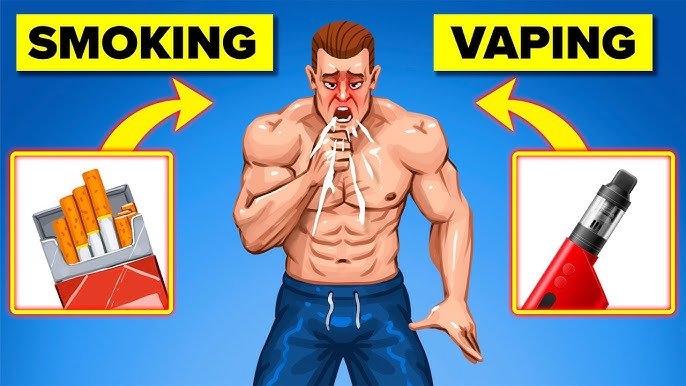
In other words, vaping may be the “lesser evil,” but quitting altogether remains the optimal choice for health and performance.
7. Practical Recommendations for Gym-Goers Who Vape
If you vape and train, here are strategies to minimize the negative effects while working toward healthier habits:
- Avoid vaping pre-workout: Nicotine-induced vasoconstriction and heart rate elevation can make workouts feel harder.
- Stay hydrated: Compensate for potential dehydration by drinking more water before and after workouts.
- Prioritize lung health: Incorporate aerobic conditioning (cycling, running, swimming) to counteract vaping-related declines in respiratory capacity.
- Focus on recovery: Improve sleep hygiene and reduce evening nicotine use.
- Consider quitting: If peak performance and long-term health are priorities, seek professional support or nicotine replacement therapies to taper down use.
8. Final Takeaway
Vaping may seem harmless compared to traditional smoking, but scientific evidence shows clear negative effects on cardiovascular efficiency, lung function, muscle recovery, and overall gym performance. While it may not devastate health in the short term, consistent vaping conflicts with the physiological demands of training and slows progress.
For athletes and fitness enthusiasts who aim to maximize their potential, the best path is clear: reducing or eliminating vaping altogether will give your body the best environment to grow stronger, recover faster, and perform at its peak.
The Cellular Sabotage: Vaping’s Impact on Muscle Function and Anabolic Signaling
For the dedicated strength athlete, the concern extends beyond cardiovascular and respiratory function to the very core of muscle adaptation. Beyond the well-documented vasoconstriction, nicotine and other aerosolized compounds may directly interfere with the cellular machinery responsible for muscle growth. Research indicates that chronic nicotine exposure can disrupt mammalian target of rapamycin (mTOR) signaling, the primary pathway that triggers muscle protein synthesis in response to resistance training. This represents a form of cellular sabotage, where the stimulant effects of nicotine on the central nervous system are counteracted by its inhibitory actions at the muscular level. Furthermore, emerging studies suggest that the oxidative stress induced by vaping aerosols can accelerate the breakdown of muscle proteins and impair satellite cell activity—stem cells essential for muscle repair and growth. This creates a paradoxical scenario where an athlete may train with intense focus and effort, yet the physiological environment fostered by vaping systematically undermines the hypertrophic response, leading to suboptimal gains despite rigorous training.
The Paradox of the “Performance Enhancer”: Nicotine’s Dual Role and the Elite Sports Dilemma
An intriguing and often overlooked facet of this discussion is nicotine’s historical use as a performance-enhancing substance in certain athletic circles. Its stimulant properties can acutely enhance focus, reaction time, and even pain tolerance, which some athletes mistakenly interpret as a net benefit for training. This creates a dangerous health-performance paradox. An athlete might experience a subjective boost in alertness during a workout while simultaneously incurring long-term deficits in recovery capacity, cardiovascular efficiency, and muscular development. The World Anti-Doping Agency (WADA) does not currently ban nicotine, but it monitors its use due to these potential ergogenic effects and health risks. This places a significant burden of education on coaches and sports scientists. For the fitness enthusiast or competitive athlete, the decision becomes a critical cost-benefit analysis: does the perceived short-term mental edge outweigh the scientifically demonstrated long-term impairments in recovery, oxygen utilization, and anabolic potential? For anyone whose goal is sustained progress, peak performance, and long-term health, the evidence strongly suggests that the costs far outweigh the fleeting benefits.