

Description
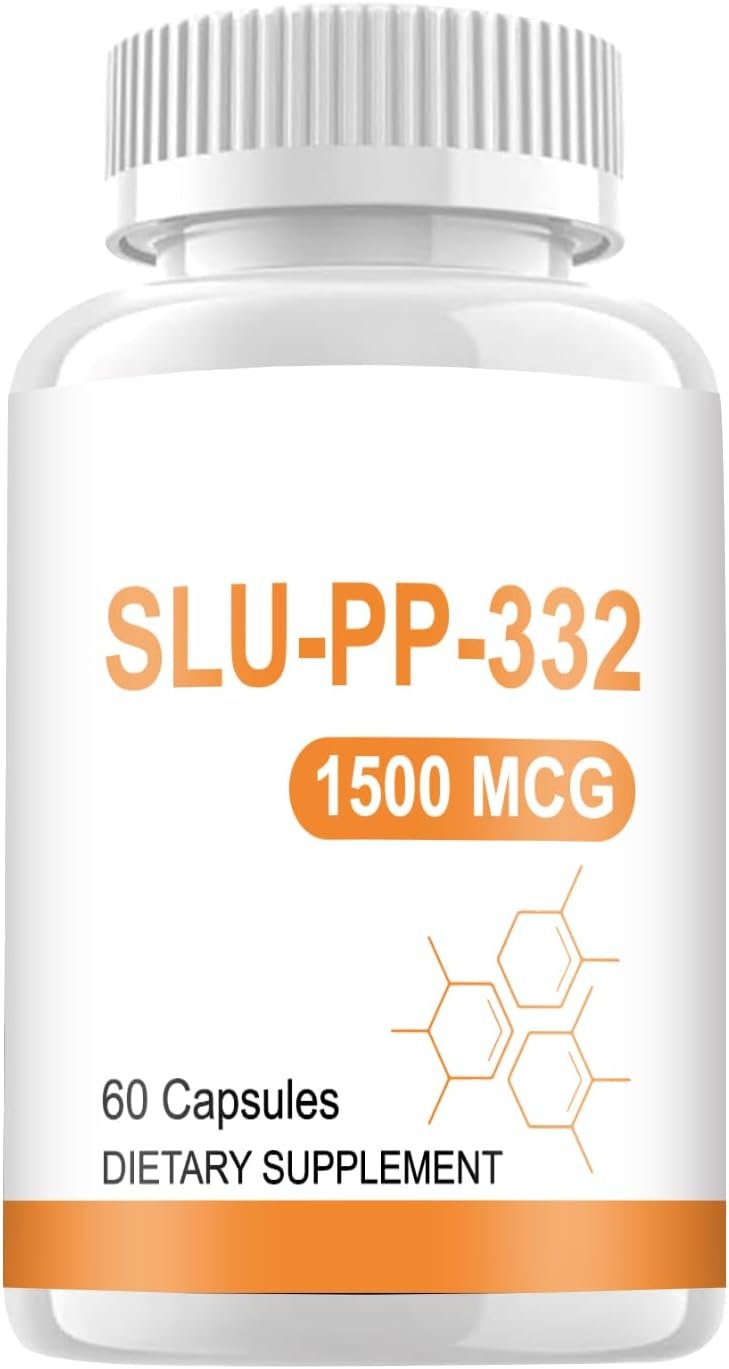
SLU PP 332 Peptide Capsules | 3RD Party Tested
🔬 What is SLU-PP-332
-
SLU-PP-332 is a synthetic small-molecule agonist of “estrogen-related receptors” (ERR α/β/γ).
-
In laboratory (animal and cell) studies, it appears to “mimic” many effects of exercise: enhancing mitochondrial function, boosting energy metabolism, increasing fat oxidation, possibly improving endurance, improving insulin sensitivity, reducing fat mass, and improving markers of metabolic syndrome.
-
Because of those effects, SLU-PP-332 has attracted attention as a potential “exercise mimetic” — i.e., a compound that might reproduce some benefits of exercise, at least under certain conditions.
-
Some dosing-guidelines (from sellers/manufacturers) suggest usage “1 to 3 times daily, 250 µg to 1.5 mg orally” (though such guides explicitly include disclaimers that they are not a substitute for individualized medical advice. )
⚠️ What’s Known — and What’s Not Known
Known / Observed (Preclinical Evidence)
-
In mice, SLU-PP-332 has been shown to reduce adiposity (fat mass), improve glucose tolerance and insulin sensitivity, reduce hepatic fat and inflammation — indicating potential benefit in metabolic syndrome / obesity contexts.
-
It appears to enhance mitochondrial respiration / density, increase oxidative (endurance-type) muscle fibers, and improve exercise capacity in rodent studies.
-
In vitro (cell-line) studies show improved cellular respiration and metabolic signaling consistent with enhanced mitochondrial and metabolic function.
Unknown / Unproven / Risk-Related
-
No human clinical trials: As of 2025, SLU-PP-332 has not entered human clinical trials.
-
Safety in humans is therefore unknown. Potential risks (observed in animal studies at higher doses) reportedly include changes in liver enzymes, transient hyperthermia, increased heart rate, and possible off-target effects at high concentrations.
-
Because it’s unapproved by the U.S. Food and Drug Administration (FDA), any health claims (e.g. “weight-loss,” “anti-aging,” “exercise substitute,” “metabolic booster”) are unproven and not legally permitted for marketing as treatments.
-
Many products marketed as “supplements” or “peptide capsules” may in fact be unapproved drugs — and there’s regulatory concern that such compounds are being sold illegally or deceptively.
-
Third-party testing (or presence of a “certificate of analysis”) does not guarantee effectiveness — only that the product likely contains what is listed (if accurately done). It says nothing about safety or clinical benefit. (This applies to all supplements/unapproved compounds.)
✅ What “3rd Party Tested” Means — and What It Doesn’t
If a product advertises “3rd Party Tested,” that may indicate that an independent lab verified something about the product — often: ingredient identity/purity, dosage accuracy, contaminants, heavy metals, etc. That can help reduce risk of mislabeled or adulterated products.
BUT:
-
It does not mean the compound is safe or effective in humans.
-
It does not substitute for rigorous clinical trials to prove benefits.
-
For unapproved drugs (or research-grade peptides), third-party testing for purity still does not address fundamental unknowns such as long-term safety, side-effects, pharmacokinetics, or efficacy.
🧑⚠️ Regulatory & Safety Considerations
-
According to FDA policy, substances marketed with health claims as treatments or “therapies” must be approved drugs — and unapproved peptides that claim to treat or prevent disease are often illegally marketed.
-
In past enforcement actions, the FDA has found many dietary supplements (especially for weight loss, enhancement, etc.) sold online contain undeclared or harmful ingredients — sometimes prescription-strength drugs — posing serious risks.
-
The market for “peptide supplements” is especially risky, because many of these compounds are still considered experimental, “research chemicals,” or unapproved drugs — often sold with disclaimers such as “not for human consumption.”
🧾 What to Know (and Ask / Check) — If You’re Evaluating SLU-PP-332 Capsules
If you are reviewing such a product (e.g. the Amazon listing you saw), these are key questions / checks to keep in mind:
-
Is there credible evidence in humans? — For SLU-PP-332, the answer: no published human clinical data (as of 2025).
-
What does “3rd Party Tested” mean exactly? — Is there a Certificate of Analysis (COA)? What labs tested? Did they test for purity, contaminants, dosage?
-
What is the legal status? — Is this marketed as a “supplement,” “research chemical,” or “drug”? Does the seller disclaim “not for human consumption”?
-
Are there disclosed safety/toxicity data? — Even animal studies showed potential side effects; long-term safety unknown.
-
What alternative, proven interventions exist? — For metabolic health, fat loss, mitochondrial health, exercise and diet remain best-supported; any experimental compound should be treated cautiously.
🧑⚕️ My Summary View (Based on Evidence)
SLU-PP-332 is a promising research compound, with intriguing preclinical data showing “exercise-mimetic” and metabolic benefits in animals and cells. However — and this is critical — there is no reliable evidence from human trials confirming safety or efficacy. A “third-party tested peptide capsule” claiming to deliver SLU-PP-332 should be regarded as experimental, with uncertain benefit and potentially significant unknown risks.
If you decide to take any such product, it would be wise to proceed with great caution and — ideally — under medical supervision.

Reviews
There are no reviews yet.