

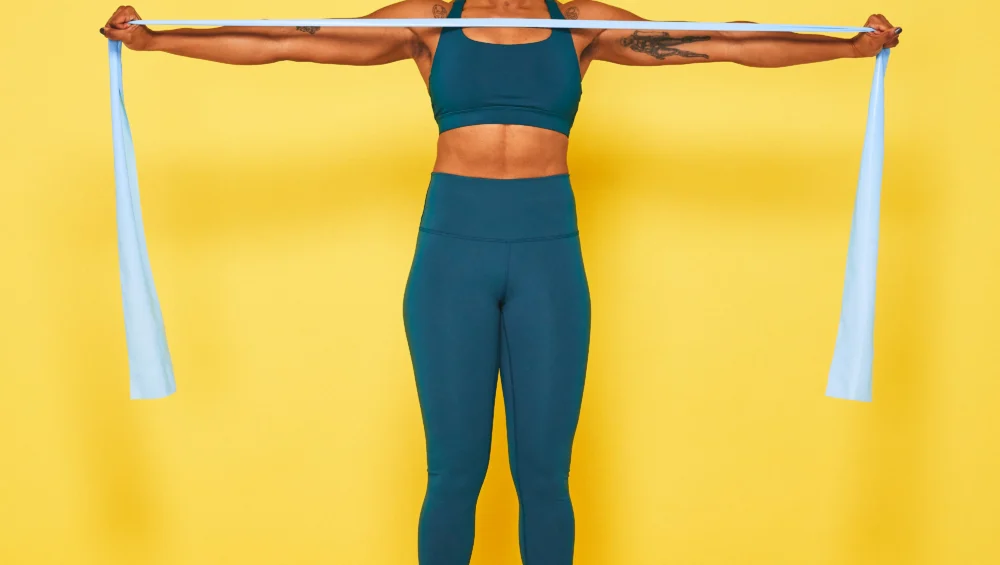
Resistance Bands – all you need to know. In an era where efficient, versatile, and accessible training is paramount, resistance bands have transcended their reputation as mere warm-up tools to become the centerpiece of intelligent home gyms. This evolution reflects a deeper understanding of functional strength, adaptive training, and space-conscious living. This analysis examines the technical merits, practical applications, and transformative potential of resistance band systems for individuals seeking professional-grade results outside commercial fitness environments.
Beyond Elasticity: The Biomechanical Advantage of Variable Resistance
The fundamental superiority of high-quality resistance bands lies in their application of variable tension resistance. Unlike the constant load of free weights or machines, bands provide increasing resistance as they are stretched—a force curve that more accurately mirrors human strength potential. At the start of a movement (e.g., the bottom of a squat), where mechanical leverage is poorest, tension is lightest. As you extend into the strongest range of motion, tension peaks. This accommodative loading places optimal stress on muscles throughout the entire range, can be gentler on joints, and may enhance muscle time-under-tension for hypertrophy.
This principle allows for linear strength progression without requiring an ever-growing rack of plates. Progression is achieved not just by moving to a thicker band, but through refined methods: increasing repetitions, shortening rest periods, leveraging band anchoring for novel angles, or utilizing band loops to add resistance to traditional free-weight exercises like barbell squats or bench presses.
Deconstructing the Arsenal: Types, Materials, and Specifications
A sophisticated approach requires understanding the ecosystem of band equipment, which extends far beyond simple loops.
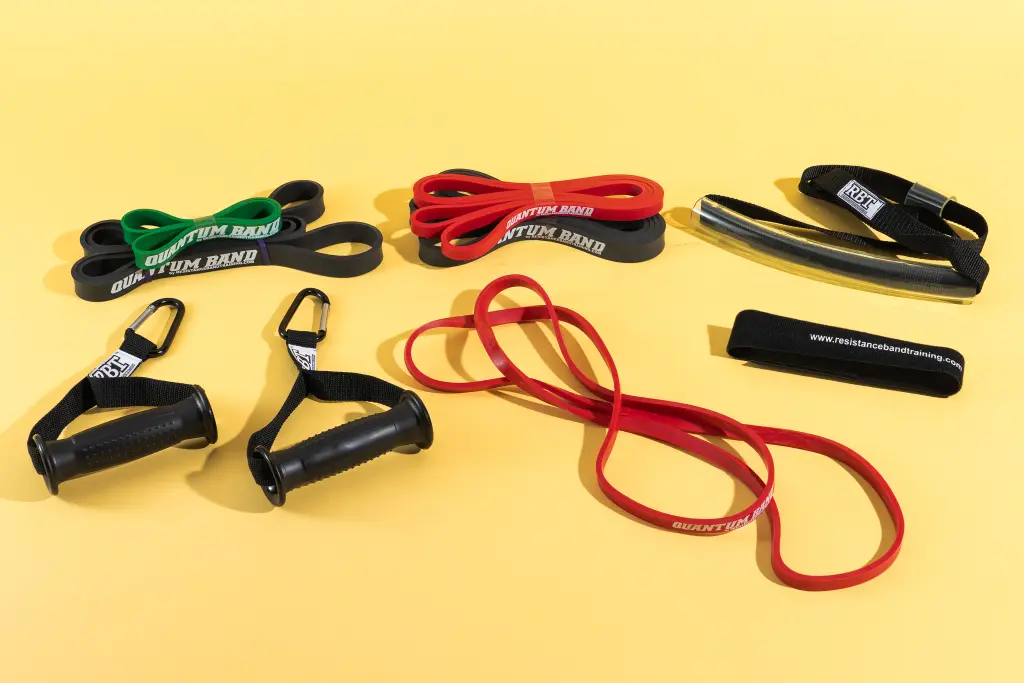
- Loop Bands (Pull-Up Assistance/Glute Bands): Typically flat, continuous loops of durable latex or fabric. Used for lower-body activation, rehabilitation, and—critically—to assist or add resistance to bodyweight exercises. Fabric-clad versions offer greater durability and reduced pinch.
- Tube Bands with Handles: The classic “home gym” system. Consist of a latex tube with plastic handles and often a door anchor. Ideal for mimicking cable machine movements (rows, chest presses, lat pulldowns) and providing a secure grip. Quality is determined by the sleeve protecting the tube at anchor points and the swivel integrity of the handles.
- Flat Therapy Bands: Long, thin sheets of latex, sold by the roll or in pre-cut lengths. Offer fine-grained, low-level resistance for rehabilitation, mobility work, and physical therapy. The foundation for precise, low-load movement patterning.
- Power/Resistance Band Sets: Long, wide bands without handles, typically color-coded by resistance (e.g., 15-200 lbs of tension). The professional’s choice for serious strength training. They are used for explosive power movements (band-resisted sprints), compounding with free weights, and heavy-duty anchor work on power racks. Constructed from layered natural latex for maximum durability and tension.
Material Science Matters: Premium bands use 100% natural latex, offering superior elasticity, durability, and consistent resistance profiles. Always check for layered construction in power bands, which prevents snapping. For those with latex allergies, high-quality thermoplastic elastomer (TPE) options exist, though their feel and longevity can differ.
Architecting a Complete Home Gym System
The true power of resistance bands is realized through strategic integration and anchoring solutions.
- The Anchor Point Ecosystem: A door anchor is the basic entry point. For a full-scale setup, invest in a wall-mounted or ceiling-mounted anchor system—a single sturdy hook or a multi-point pulley rig. This transforms any wall into a functional training station, enabling hundreds of cable-style exercises from a fixed point.
- The Hybrid Training Model: The most effective modern approach combines bands with minimal free weights. For example: placing a power band underfoot during dumbbell curls (adding peak tension), anchoring a band to a rack for “banded bench presses” (improving lockout strength), or using a loop band for hip assistance during pull-ups. This hybrid model offers the benefits of both variable and constant resistance.
- Portability as a Performance Feature: Unlike a rack of dumbbells, a complete band gym fits into a single bag. This enables environmental training—taking workouts outdoors, to a park, or on the road without regression. Consistency, the ultimate driver of results, is thus guaranteed.
Critical Evaluation: Advantages and Realistic Limitations
Advantages:
- Joint-Friendly & Adaptive: Low impact on joints; tension can be modulated micro-step by simply adjusting grip width or stance.
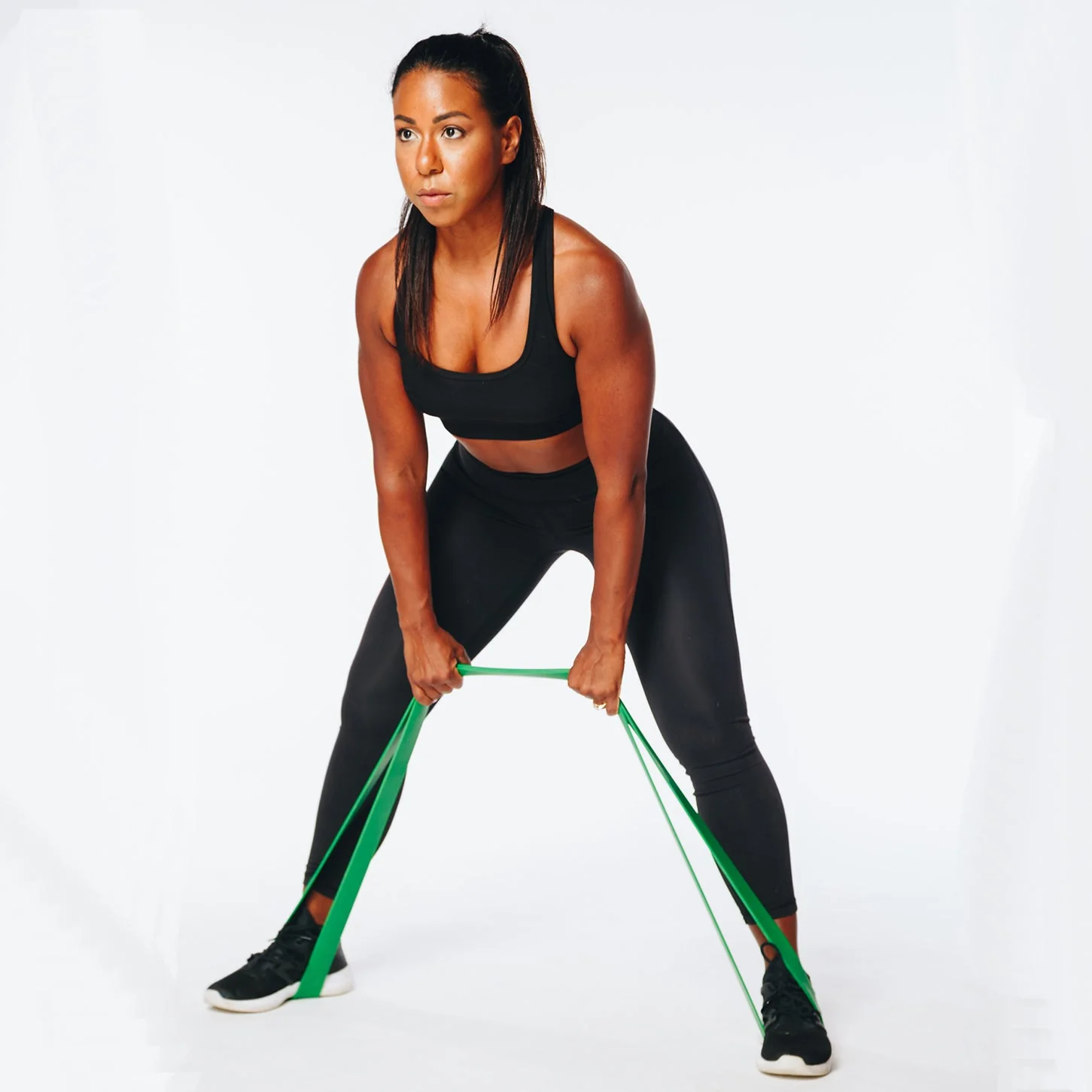
- Unmatched Exercise Library: From isolated rotator cuff work to compound lower-body movements like banded good mornings, the variety exceeds most single machines.
- Scalable for All Levels: From rehabilitation (using thin therapy bands) to maximal strength (using stacked heavy power bands), the system scales infinitely.
- Cost & Space Efficiency: A complete, professional-grade set costs a fraction of a single machine and stores in a drawer.
Considerations:
- The Lack of Eccentric Loading: Bands provide strong concentric (lifting) resistance but minimal eccentric (lowering) load, a key driver for muscle damage and growth. This can be mitigated by slowing the eccentric phase consciously or integrating hybrid methods.
- The Need for Technical Proficiency: Proper anchoring and understanding of vector angles are required to target muscles correctly. A learning curve exists compared to the fixed path of a machine.
- Durability & Maintenance: Bands degrade with exposure to UV light, ozone, and oils. Proper storage away from sunlight and without stretching when not in use is essential. Regular inspection for nicks or tears is necessary for safety.
Implementation Protocol for Optimal Results
- Start with a Comprehensive Set: Invest in a kit offering 5-6 varying resistance levels (light to extra-heavy) that includes handles, ankle cuffs, and a door anchor.
- Prioritize Anchoring Safety: Never anchor a band to a weak or sharp object. Use officially designed door anchors and ensure mounts are secured into wall studs.
- Program with Intention: Structure workouts like any strength program. For hypertrophy: 3-4 sets of 8-15 reps to near fatigue. For strength: Use heavier bands for 3-5 reps, focusing on explosive concentric movement.
- Embrace the Mind-Muscle Connection: The fluid resistance demands greater proprioception. Focus on feeling the target muscle work throughout the entire range of motion.
Conclusion: The Intelligent Foundation
Resistance bands are not a compromise for the home exerciser; they are an intelligent, evidence-backed choice that demands and develops a higher degree of kinesthetic awareness. They empower the user to construct a truly personalized, adaptive, and space-efficient training environment. For the individual seeking a sustainable, joint-conscious, and profoundly versatile path to strength, mobility, and hypertrophy, a well-curated resistance band system does not merely supplement a home gym—it competently constitutes one.
Frequently Asked Questions (FAQ)
1. Can you build significant muscle using only resistance bands?
Yes, provided you apply the core principles of progressive overload. This is achieved by increasing tension (using thicker bands or combining bands), increasing volume (reps/sets), reducing rest time, or mastering more challenging exercise variations. Bands provide the necessary mechanical tension, a primary driver of muscle growth, especially when taken to momentary muscular failure.
2. How do I know what resistance level to choose?
A band should allow you to complete your target reps with proper form while reaching near-fatigue by the final rep. For strength (3-6 reps), you will need a band that challenges you heavily by rep 3. For hypertrophy (8-15 reps), choose a band where you approach failure within that range. Most quality sets are color-coded by tension (e.g., light, medium, heavy).
3. What is the safest way to anchor bands?
- For Doors: Only use a purpose-designed door anchor strap fed over the top of a solid, closed door. Never tie a band directly to a door handle.
- For Walls/Ceilings: Install a heavy-duty anchored strap, a dedicated wall mount, or a secure eye bolt directly into a wall stud or ceiling joist. Drywall anchors alone are insufficient for dynamic loads.
- Self-Anchoring: For many lower-body exercises, you can securely anchor bands under your feet or around a stable, solid post (like a squat rack upright).
4. How long do resistance bands last, and how do I maintain them?
With proper care, high-quality latex bands can last 1-2 years with regular use. To maximize lifespan: store them unstretched in a cool, dark place; keep them away from direct sunlight and sharp edges; clean them with mild soap and water (avoid oils); and always inspect for small tears, nicks, or significant thinning before use.
5. Can bands effectively replace free weights or machines?
They can serve as a primary training tool for many goals, offering unique advantages in variability and portability. However, for maximal absolute strength in classic lifts like the deadlift or squat, free weights are ultimately superior due to their constant load and gravitational vector. The most powerful approach is often integration—using bands to complement free weights, not necessarily replace them entirely.